
Clean a Glass Top Stove: Burnt-On Mess, No Scratches
- November 29, 2026
- No Comments
To clean a glass top stove, let the surface cool completely, then wipe loose debris with a damp microfiber cloth. Apply a baking soda paste for stuck-on grime, use a razor scraper held at a 30–45° angle for burnt-on food, then polish with a cooktop cream or white vinegar and buff dry with a clean microfiber cloth.
Burnt food, grease splatter, and especially burnt sugar can bond hard to a glass-ceramic cooktop surface. Grab the wrong scrubber and you trade one problem for another: permanent scratches that catch light every time you cook. At Ivy Cleans, our crews clean glass and ceramic cooktops in busy family kitchens and Airbnb rental turnovers regularly. What follows is exactly what we do - step by step, with the reasoning behind each move.
The Short Answer: Five Steps That Handle Almost Everything
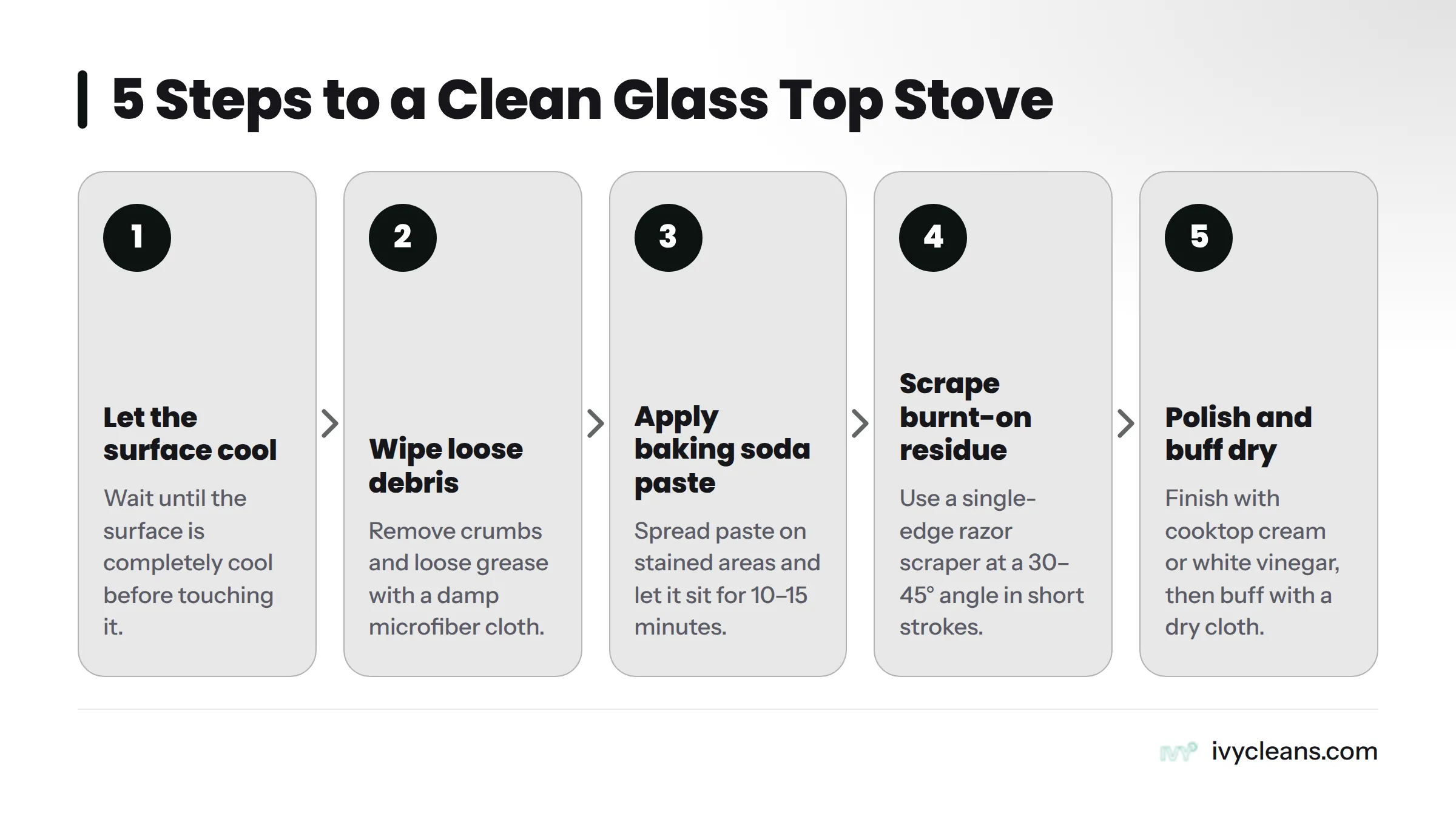
Let the surface cool completely. Wipe away loose debris with a damp microfiber cloth. Apply a baking soda paste and let it sit for 10–15 minutes. Work a single-edge razor scraper at a 30–45° angle for any burnt-on residue. Finish by polishing with a cooktop cream or white vinegar, then buff dry.
That sequence handles everything from a light grease film to a week-old burnt sugar disaster. Let's break it down.
Supplies to Pull Together Before You Start
Having everything within reach saves you from leaving a baking soda paste sitting longer than it should while you dig through cabinets:
- 2–3 microfiber cloths
- Dish soap
- Baking soda
- White vinegar (in a spray bottle)
- Single-edge razor blade scraper (new blade)
- Cooktop cleaning cream such as Weiman Cook Top Cleaner & Polish or Cerama Bryte Cooktop Cleaner - optional, but recommended for the polish step
What not to use on a glass or ceramic cooktop:
| Never Use This | Why It Causes Damage |
|---|---|
| Steel wool or wire scrubbers | Scratches the glass-ceramic surface permanently |
| Abrasive scrubbing pads (Scotch-Brite, etc.) | Leaves micro-scratches that dull the finish |
| Ammonia-based cleaners | Can streak and etch the surface coating |
| Bleach-based cleaners | May discolor the surface and void your warranty |
| Magic Eraser (melamine foam) | Micro-abrasive; can scratch coated glass surfaces |
| Windex and glass cleaners | Leave streaks and are not formulated for cooking residue |
| Cast iron pans dragged across the surface | The rough base gouges the glass directly |
| Paper towels with grit or stiff texture | Fine scratches accumulate over time |
Cooktop manufacturers including Whirlpool and GE Appliances explicitly warn against abrasive pads and harsh chemical cleaners - using them can void your appliance warranty.
Step 1 - Let the Cooktop Cool Completely
This step is non-negotiable. Glass-ceramic surfaces are sensitive to thermal shock: applying a cold, wet cloth to a hot surface can crack the glass. Beyond that risk, cleaning products react differently on a hot surface - baking soda can bake onto the glass rather than lift grime, and vinegar burns off before it does any useful work.
The glass-ceramic material used in most smooth-top stoves (often called Ceran glass after the Schott AG brand that pioneered it) expands slightly under heat. A sudden temperature change strains that expansion. Wait until the surface indicator light goes off and the glass feels room temperature to the touch - usually 20–30 minutes after cooking.
Step 2 - Wipe Away Loose Debris First
Spray a microfiber cloth lightly with water or add a small drop of dish soap, then wipe the entire surface to pick up crumbs, dry spills, and loose grease. Do this before applying any paste or liquid. Scrubbing crumbs into a baking soda paste turns them into tiny abrasive particles - exactly what you're trying to avoid.
This two-minute wipe-down is also your complete daily cleaning routine. After every cook session, once the surface cools, a damp microfiber cloth removes the light residue that builds into stubborn stains over time. That daily habit is the single best way to keep a glass cooktop looking new.
If you're doing a full kitchen refresh rather than a spot clean, the room-by-room cleaning guide on the Ivy Cleans blog is a solid place to start before you tackle appliances.
Step 3 - Clean Glass Stove with Baking Soda Paste for Everyday Grime
Baking soda is mildly alkaline - just alkaline enough to break down grease and food acids without scratching. Mix roughly three parts baking soda with one part dish soap and enough water to form a thick paste, then spread it over the stained areas.
Wet two or three microfiber cloths with hot water, wring them out so they're damp but not dripping, and lay them flat over the paste. Let everything sit for 10–15 minutes. The heat from the damp cloths softens baked-on residue while the baking soda works underneath. After the soak, wipe the paste away using circular motions. Most everyday stains come off at this stage.
One question we hear often: does baking soda scratch glass? No. Its hardness on the Mohs scale is well below that of glass-ceramic, so it poses no scratch risk when applied as a paste with a soft cloth.
For a light grease film with no stuck-on food, skip the paste entirely. Spray white vinegar directly on the cool surface and wipe with a microfiber cloth. White vinegar is mildly acidic, cuts grease, and evaporates cleanly without leaving a film. It doesn't damage glass-ceramic surfaces and gives you the best streak-free finish of any method here.
Step 4 - Remove Burnt Food from Glass Stove with a Razor Scraper
Burnt Sugar Is the Hardest Case
Burnt sugar is in a category of its own. When sugar melts and carbonizes on glass-ceramic, it bonds to the surface at a molecular level and becomes glass-hard. Here's a timing trick worth knowing: if you catch a sugar spill while the surface is still slightly warm - not hot, just warm, well below the danger zone - it's noticeably easier to scrape off. Once it cools and hardens fully, you'll need more passes with the razor.
Do not try to scrub burnt sugar with a pad. You'll spread it and scratch the surface. Go straight to the razor scraper.
How to Use the Razor Scraper Without Causing Glass Stove Scratches
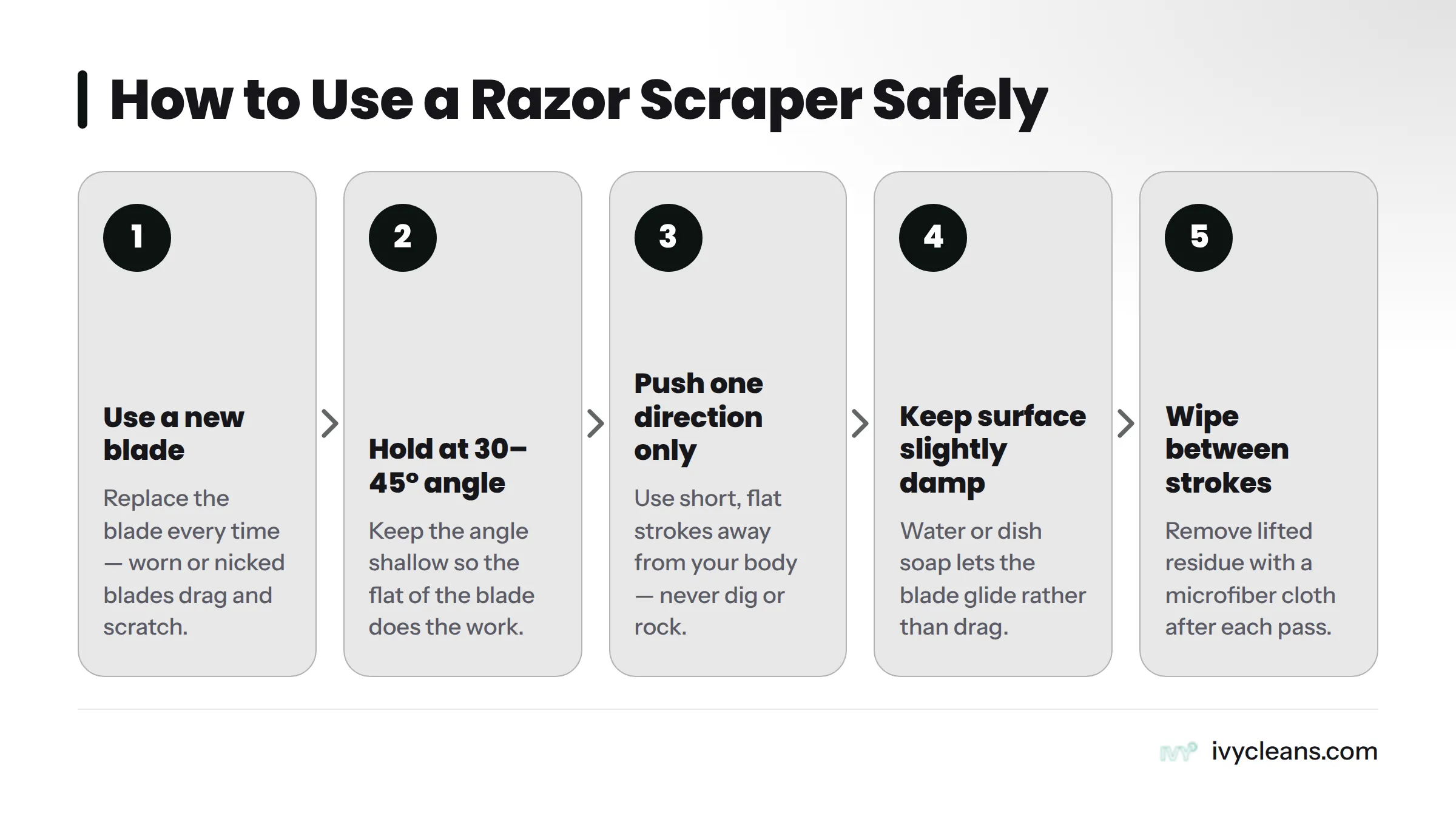
A single-edge razor blade scraper is safe on glass-ceramic when used correctly. Here's the technique:
- Use a new blade every time. A worn or nicked blade drags and scratches.
- Hold the scraper at a 30–45° angle to the surface - shallow enough that the flat of the blade does the work, not the corner.
- Push in one direction only - away from your body, in short, flat strokes. Never dig, rock, or gouge.
- Keep the surface slightly damp with water or dish soap so the blade glides rather than drags.
- Wipe away lifted residue with a microfiber cloth between strokes.
The razor scraper is designed specifically for smooth-top stoves and is explicitly listed as a safe tool in most manufacturer care guides. The risk comes from the wrong angle, dull blades, and circular scrubbing motions - not the tool itself.
Step 5 - Polish the Surface and Buff Dry
After scraping and wiping, the surface may look clean but dull. A glass cooktop cleaner cream is what brings the finish back. Apply a small amount of Weiman or Cerama Bryte directly to the glass, work it in with a soft cloth using circular motions, then buff off with a clean dry microfiber cloth.
No cooktop cream on hand? Spray white vinegar over the surface and buff immediately with a dry microfiber cloth. The acidity cuts any soap film, and the fast evaporation leaves a streak-free finish. That's the full cleaning cycle - paste, scrape, polish, buff.
How to Avoid Glass Stove Scratches: What Actually Works
Scratch prevention comes down to habits, not just the right tools. Here's the comparison:
| Do This | Never Do This |
|---|---|
| Let the surface cool before cleaning | Clean while the surface is still warm |
| Use microfiber cloths only | Use paper towels, sponges, or abrasive pads |
| Replace razor blades before each use | Reuse a dull or chipped blade |
| Lift cookware on and off the surface | Drag pots and pans across the glass |
| Use flat-bottom stainless or hard-anodized pans | Use rough-bottomed cast iron or stoneware |
| Keep the glass free of sugar or salt granules before cooking | Cook over spills or debris |
Cast iron is a particular risk. The rough, pebbly texture of an unseasoned or poorly seasoned cast iron base is abrasive enough to scratch glass-ceramic in a single drag. If you use cast iron regularly, a smooth-top stove may not be the right match for your kitchen - or you need to lift every pan, every time, without exception.
For renters, a scratched cooktop can directly affect your security deposit. The move-out cleaning checklist on the Ivy Cleans blog covers what landlords typically inspect - glass cooktop condition is on that list.
When Cleaning Won't Fix It Anymore
Some damage is beyond what any cleaning method can resolve. Stop cleaning and contact your cooktop's manufacturer or a licensed appliance technician if you notice:
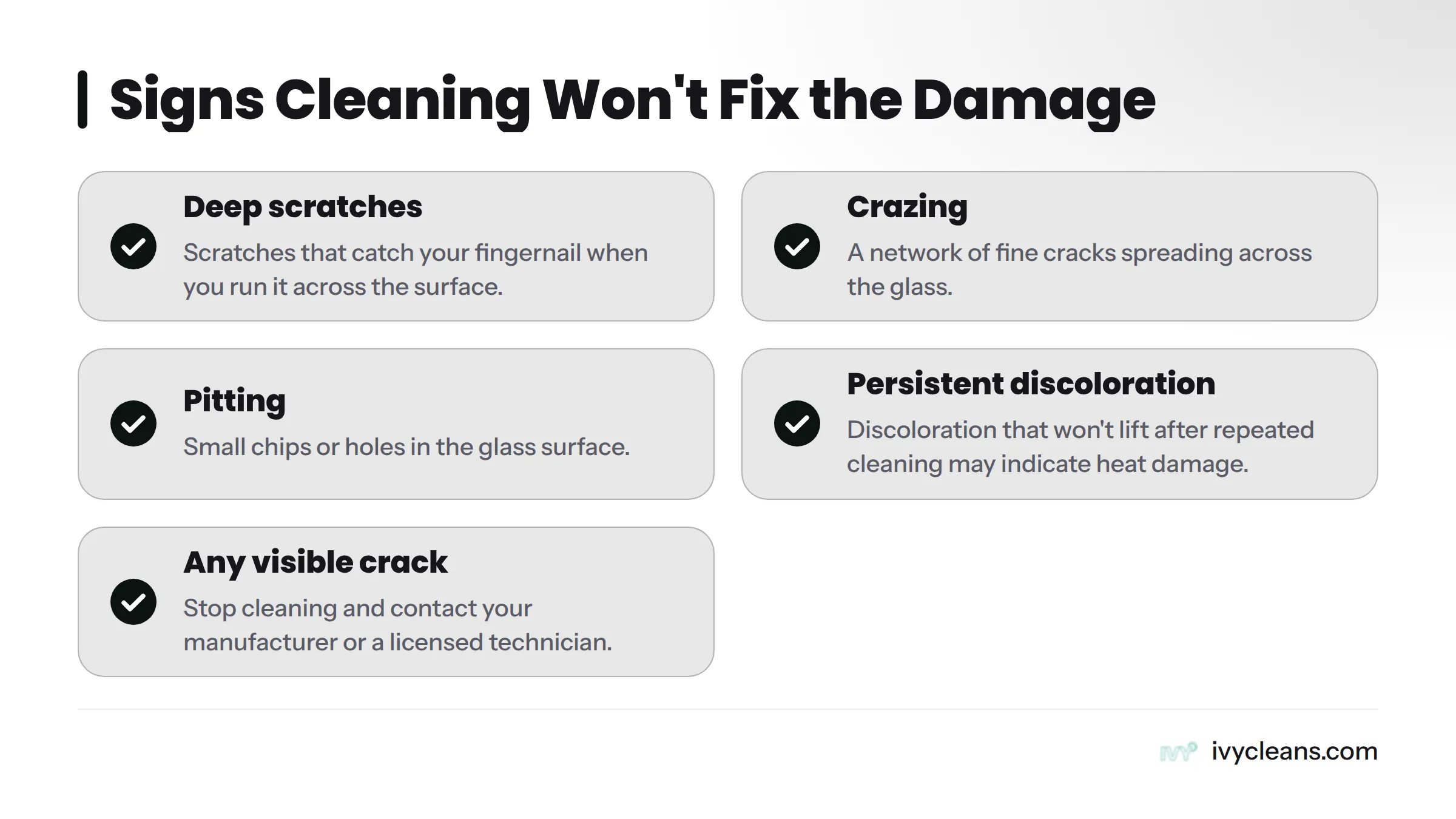
- Deep scratches that catch your fingernail when you run it across the surface
- Crazing - a network of fine cracks in the glass
- Pitting - small chips or holes in the glass
- Persistent discoloration that won't lift after repeated cleaning, which may indicate a heat-damaged coating
- Any visible crack, no matter how small
Using abrasive tools on a damaged surface makes it worse and can void your warranty. Most major manufacturers provide care documentation - check your appliance manual or the manufacturer's support site before attempting further cleaning on a visibly damaged surface.
This article covers cooktop surface cleaning only. For the oven cavity below the cooktop, see our guide to baking soda oven cleaning. For the filter above the stove, see our guide to cleaning the range hood filter.
If you'd rather hand the whole kitchen over to someone else, Ivy Cleans' deep cleaning service covers cooktop surfaces, appliances, and the full kitchen as part of a thorough whole-home clean.
Frequently Asked Questions
Is it safe to use Windex on a glass cooktop? No. Windex and similar ammonia-based glass cleaners are not formulated for cooking residue and leave streaks on glass-ceramic surfaces. They can also interact unpredictably with high heat if any residue remains before cooking. White vinegar is a safer, more effective alternative for a streak-free finish.
Can you use a Magic Eraser on a glass stove top? Avoid it. Magic Erasers are made from melamine foam, which works as a micro-abrasive. That's exactly what causes fine surface scratches on glass-ceramic cooktops. Stick with microfiber cloths and baking soda paste for stubborn spots.
What do professional cleaners use on glass cooktops? At Ivy Cleans, the go-to method is baking soda paste plus a razor scraper for heavy buildup, followed by a ceramic cooktop cleaner like Weiman or Cerama Bryte for the polish step. White vinegar handles the final streak-free buff. No specialty chemicals needed - just the right tools used in the right order.
How do you open an electric stove top to clean underneath? Most smooth-top electric ranges do not have a hinged top panel designed to be lifted by the user. The glass-ceramic surface is typically fixed. Cleaning underneath the cooktop surface requires accessing the oven cavity from the front door, or in some freestanding range models, removing the drawer at the base. Check your specific model's owner manual before attempting to open any panel - forcing it can break a wiring harness or crack the glass.
How often should you deep clean a glass stove top? A quick wipe-down after every use keeps buildup from forming. A full deep clean - baking soda paste, razor scraper if needed, cooktop cream polish - is worth doing once a month in an actively used kitchen, or any time you notice residue that the daily wipe-down isn't clearing.
Can you use Bar Keepers Friend on a glass cooktop? Bar Keepers Friend makes a Cooktop Cleaner specifically formulated for smooth-top stoves - that version is generally considered safe. The original powder is more abrasive and not recommended for glass-ceramic surfaces. Always confirm that the product you're using is labeled cooktop-safe before applying it.
How do you clean an induction cooktop - same as a glass top stove? Yes. Induction cooktops use the same glass-ceramic surface as radiant electric cooktops, so the cleaning method is identical: cool surface, microfiber wipe, baking soda paste for stains, razor scraper for burnt-on food, cooktop cream for polish. One difference worth knowing: because induction only heats the pan rather than the surface directly, food spills are slightly less likely to burn onto the glass - but they still do, especially sugary sauces.
Keeping a glass cooktop clean is mostly about catching spills early and using the right tools. For a full kitchen reset - including the dishwasher, counters, and cabinet fronts - the Minnesota spring cleaning checklist is a good seasonal guide to work through top to bottom.
Sources
Ivy Cleans cleans homes across Minneapolis and nearby, including New Brighton, Plymouth and Richfield.
