
How to Clean a House: Room-by-Room Order That Works
- November 25, 2026
- No Comments
The best order to clean a whole house is: gather your supplies, declutter every room, dust from top to bottom, tackle the entryway, clean the bathrooms, do a routine kitchen pass, vacuum all floors, mop hard floors last, then do a final walkthrough. Follow that sequence and nothing you've already cleaned gets re-dirtied before you're done.
That's the working order the Ivy Cleans crew uses on real Minneapolis homes. This guide explains every step and the reason behind it, so you understand the logic - not just the list.
House Cleaning Order at a Glance
| Step | Area / Task | Key Action |
|---|---|---|
| Prep | Gather supplies | Load your caddy before you move |
| 1 | Declutter every room | Clear surfaces and floors first |
| 2 | Dust top to bottom | Ceiling fans → shelves → baseboards |
| 3 | Entryway | Dry sweep, shake out mats, treat salt residue |
| 4 | Bathrooms | Spray, scrub top to bottom, toilet last |
| 5 | Kitchen (routine pass) | Counters → stovetop → sink → cabinet fronts |
| 6 | Vacuum all floors | Upper floors first, work down to entryway |
| 7 | Mop hard floors | Always the final wet step |
| 8 | Final walkthrough | High-touch surfaces, missed spots, smudges |
Load Your Caddy Before You Move
Don't start cleaning and stop every ten minutes to hunt for a cloth or a spray bottle. Load a cleaning caddy once, carry it room to room, and you'll cut your total time noticeably.
What you need for a whole-house clean:
- Microfiber cloths (at least 6 - keep bathroom cloths separate from kitchen cloths)
- All-purpose cleaner
- Bathroom disinfectant spray
- Toilet brush
- Glass cleaner
- Rubber gloves
- Vacuum cleaner (with a hard-floor setting or attachment)
- Dry broom or dry mop
- Wet mop and bucket
- Mop solution appropriate for your floor type
One rule worth repeating: never use the same microfiber cloth in the bathroom and in the kitchen. Cross-contamination is real. Color-coding your cloths - blue for bathrooms, yellow for the kitchen - is the simplest fix. The Ivy Cleans blog has more on building a cleaning kit that covers every surface type.
Step 1: Declutter Every Room First
Clutter doesn't just make a space look messy - it physically blocks you from cleaning. You can't wipe a counter buried under mail, and you can't vacuum a floor covered in shoes and toys.
Here's how to move through it fast: grab a laundry basket or bin and walk through every room. Anything out of place goes in the bin. Don't sort it now. Don't put things away one item at a time - just clear every surface and every floor. Once cleaning is done, you can redistribute.
This step matters most when cleaning a messy house, where the disorder can feel overwhelming. Start here and the cleaning itself becomes straightforward.
Step 2: Dust Top to Bottom, Room by Room
Dust always falls. That's the entire logic behind top-to-bottom cleaning: start at ceiling height and work downward so dust and debris land on surfaces you haven't cleaned yet - never on ones you just finished.
Work in this order within each room:
- Ceiling fans and light fixtures
- High shelves and the tops of furniture
- Mid-height surfaces (tabletops, windowsills, picture frames)
- Baseboards and floor vents last
Microfiber cloths outperform feather dusters here. A feather duster moves dust into the air; a damp microfiber cloth traps and removes it. Work through bedrooms and living areas before you reach the bathroom and kitchen, where surfaces need disinfecting rather than dusting.
Dust before you vacuum - always. Dusting knocks debris down onto the floor. Vacuuming then picks it up. Do it in reverse and you've just dirtied a floor you already vacuumed.
Step 3: Handle the Entryway - Especially in a Minnesota Winter
If you're cleaning a house in Minneapolis or anywhere in Minnesota, the entryway deserves its own step. From November through April, road salt and de-icer residue come in on boots constantly. Left on a hardwood or tile entryway floor, that residue is abrasive - it scratches finishes and leaves a white chalky film that spreads into the rest of the house every time someone walks through.
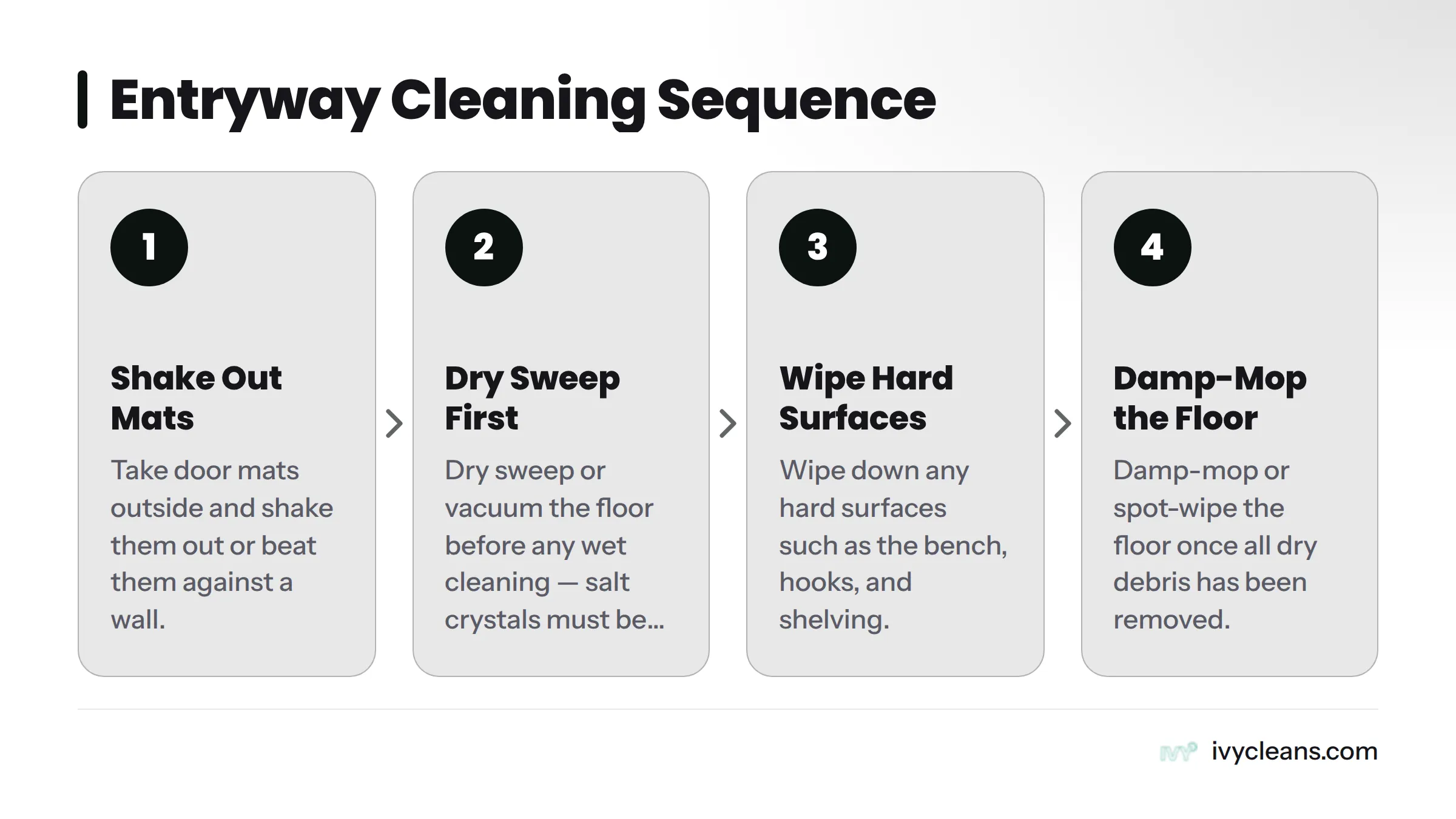
Entryway cleaning sequence:
- Take door mats outside and shake them out (or beat them against a wall)
- Dry sweep or vacuum the entryway floor before any wet cleaning - salt crystals need to be lifted, not pushed around with a wet mop
- Wipe down any hard surfaces (bench, hooks, shelving)
- Damp-mop or spot-wipe the floor once the dry debris is removed
Older Minneapolis homes with original hardwood in the entryway are especially at risk. Salt and grit ground into the wood grain by repeated foot traffic will eventually damage the finish. Getting the dry sweep in first protects the floor and keeps the rest of the house cleaner.
Step 4: Clean the Bathrooms
Bathrooms need their own supplies and their own sequence. You work from cleaner to dirtier, top to bottom, and you end with the dirtiest surface in the room.
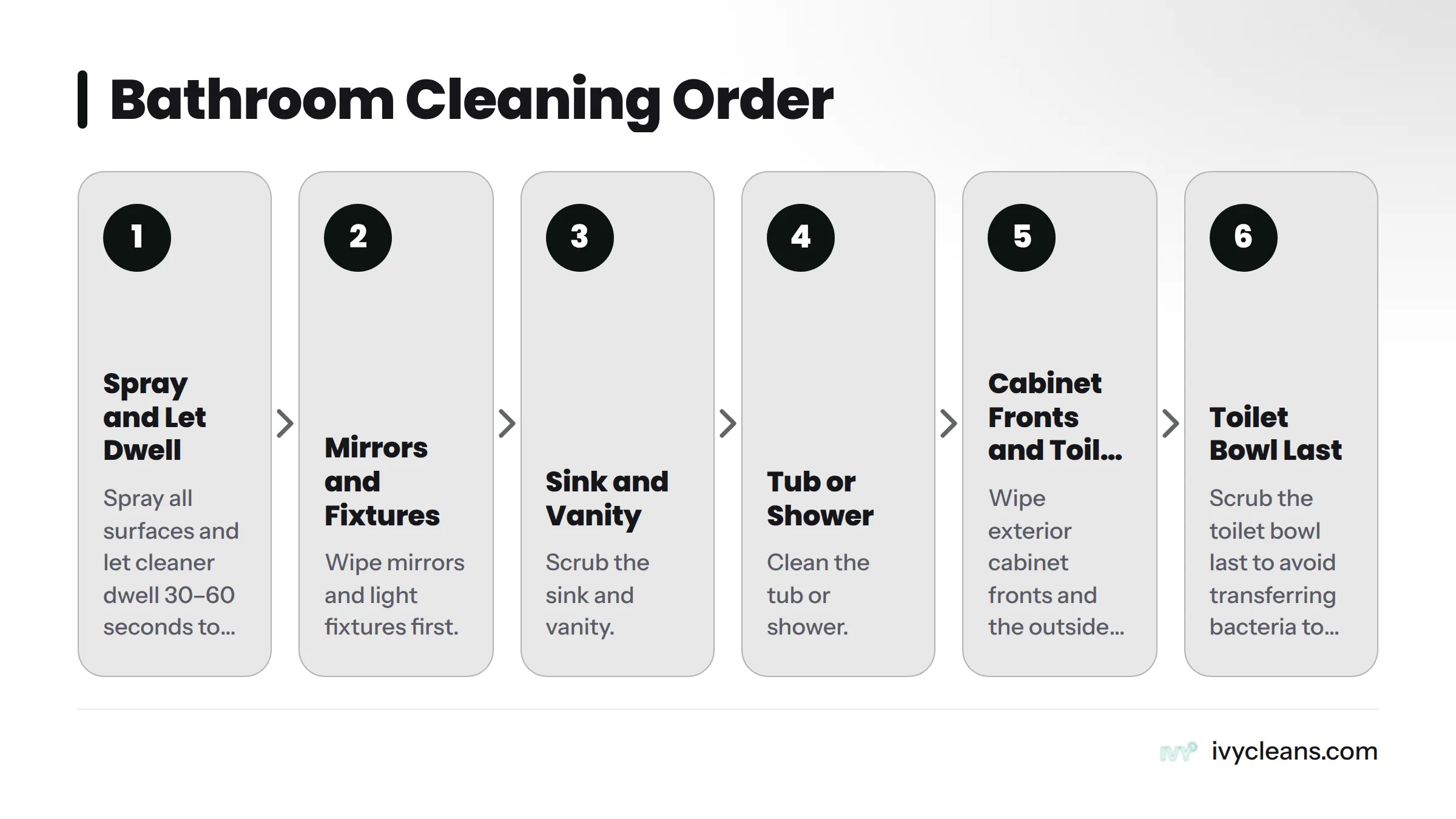
Bathroom cleaning order:
- Spray all surfaces and let the cleaner dwell for 30-60 seconds while you do other tasks - dwell time is what actually breaks down soap scum and grime
- Wipe mirrors and light fixtures first
- Scrub the sink and vanity
- Clean the tub or shower
- Wipe exterior cabinet fronts and the outside of the toilet tank and base
- Scrub the toilet bowl last - always last
Why the toilet is last: The toilet is the highest-contamination surface in the bathroom. Cleaning it last prevents transferring bacteria to the sink, the vanity, or anything else you'll touch afterward. Use a dedicated toilet brush and a separate cloth for the toilet exterior.
Finish by sweeping the floor, then giving it a quick scrub or mop.
Step 5: Do a Routine Kitchen Pass
A routine kitchen pass is not a deep clean. It doesn't include cleaning inside the oven, pulling the refrigerator away from the wall, or scrubbing the inside of cabinets. Those belong in a full kitchen deep clean - a separate session.
What a routine kitchen pass covers:
- Countertops - wipe clear and spray with all-purpose cleaner
- Stovetop surface - wipe grates or burner covers, clean the flat surface
- Microwave exterior (and interior if visibly dirty)
- Sink - scrub basin, rinse, wipe the faucet
- Cabinet fronts at handle height - the most touched, most finger-printed surfaces
Work from the back of the counter toward the sink, and always wipe downward to avoid dripping onto surfaces you've already cleaned.
Step 6: Vacuum All Floors Before You Touch a Mop
Vacuuming comes before mopping, every time. Wet mopping without vacuuming first just smears dry debris into the floor surface. On older hardwood - common in Minneapolis housing stock from the early and mid-1900s - this can grind grit into the wood grain.
Vacuuming order and technique:
- Start upstairs (or the farthest rooms from the exit) and work toward the front door
- Use slow, overlapping strokes - rushing leaves lines of debris between passes
- Use an edge attachment or crevice tool along baseboards
- For older hardwood floors, switch to the hard-floor setting or turn off the beater bar entirely; a rotating brush on bare wood can scratch the finish
- For area rugs that see heavy foot traffic, vacuum both sides
The entryway gets vacuumed last in this pass, since you already did the initial dry sweep of salt and grit in Step 3.
Here's a practical look at how professional cleaners sequence this in a full house:
Step 7: Mop Hard Floors - Always the Final Step
Mopping is the last cleaning step. The logic is straightforward: a wet floor picks up footprints, dust, and debris from everything around it. Mop first and then vacuum, or mop and then scrub the bathroom, and you've guaranteed a dirty floor before you're done.
Before you touch a wet mop:
- Confirm you've vacuumed or dry-swept the floor surface first - non-negotiable on older hardwood
- Choose the right mop and solution for your floor type
| Floor Type | Recommended Mop | Solution |
|---|---|---|
| Older hardwood | Flat microfiber mop, barely damp | Hardwood-safe cleaner, diluted per label |
| Modern engineered hardwood | Flat microfiber mop, damp | Manufacturer-recommended cleaner |
| Ceramic or porcelain tile | Sponge mop or microfiber flat mop | All-purpose or tile cleaner |
| Vinyl / LVP | Flat microfiber mop | Mild all-purpose, well diluted |
Never mop without dry-sweeping first - especially on older hardwood. Wet mopping debris into wood grain damages the finish and creates scratches over time.
Mopping direction: Start at the farthest corner of the room from the door and work backward toward the exit. That way you're never stepping on the section you just mopped.
Step 8: Final Walkthrough
The walkthrough is what separates a cleaning job that looks done from one that actually is. Walk every room once more and check for things that are easy to miss mid-flow.
Final walkthrough checklist:
- Light switches - wipe with a damp microfiber cloth
- Door handles and cabinet pulls (high-touch surfaces that often get skipped)
- Mirrors - check for streaks at an angle to the light
- Glass surfaces - windows, shower doors, stovetop glass
- Baseboards - spot-check for any dust that settled after vacuuming
- Floors - confirm no wet spots, footprints, or missed corners
- Toilet handle and flush button
- Any items displaced during cleaning - return them to their spots
- Trash - empty any cans filled during the cleaning process
- Caddy - wipe it down and restock before you put it away
Door handles and light switches are what most people forget. They're touched dozens of times a day, they don't look visibly dirty, and they almost never get wiped unless there's a deliberate step for it.
Frequently Asked Questions
How often should you clean a house? Most households benefit from a full clean every one to two weeks, with quick daily resets in between. The right cadence depends on the number of people, pets, and how much cooking and foot traffic happens day to day.
What is the most efficient way to clean your house? Follow one consistent sequence, carry all supplies in a caddy so you never backtrack, and work top to bottom in every room before moving on. If you're short on time, prioritize the highest-impact areas - bathrooms and kitchen - first.
How do I clean a room from start to finish? Declutter surfaces and floors first. Dust from top to bottom. Clean hard surfaces with the appropriate cleaner. Vacuum the floor, then mop if it's a hard surface. That four-part order applies in any room.
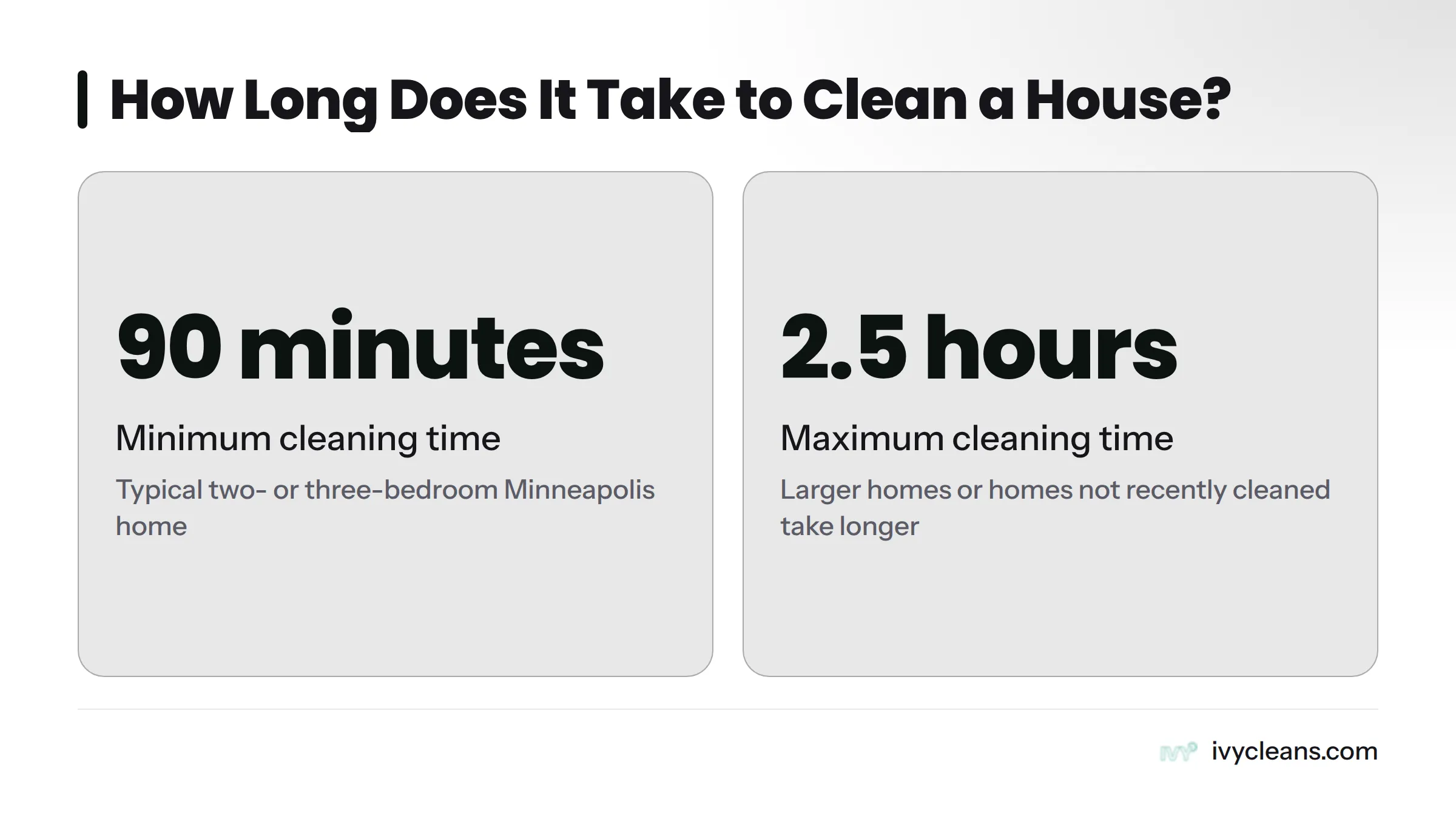
How long does it take to clean a whole house? Based on the Ivy Cleans crew's experience on Minneapolis homes, a thorough routine clean of a typical two- or three-bedroom home takes roughly 90 minutes to 2.5 hours. Larger homes, homes with multiple bathrooms, or homes that haven't been cleaned recently will take longer.
Should you dust or vacuum first? Always dust first. Dusting knocks particles down onto the floor. Vacuuming picks them up. If you vacuum first, you're redoing the floor anyway after dusting.
What do I clean first in a messy house? Declutter before anything else. You can't clean around piles - you just move dirt from one spot to another. Clear every surface and floor, then start the cleaning sequence from Step 2.
Ready to Hand It Off?
If you'd rather not spend your weekend on this, Ivy Cleans offers professional deep house cleaning in Minneapolis from a local, insured team that follows this same crew order on every job. You can also check the Ivy Cleans Minnesota spring cleaning checklist for a seasonal version of this whole-house routine, or browse the move-out cleaning checklist if you're preparing a rental for handover.
Written from the Ivy Cleans crew's working order on real Minneapolis homes. Reviewed by a cleaning team lead.
Sources
Ivy Cleans cleans homes across Minneapolis and nearby, including Apple Valley, Farmington and Rosemount.
