
How Do You Clean a Dishwasher? 7 Easy Steps
- November 27, 2026
- No Comments
Remove the filter, clear the spray arms, wipe the door gasket and interior walls, then run a hot empty cycle with white vinegar followed by a short baking soda cycle. The whole process takes about 15 minutes of hands-on time plus two empty wash cycles. Here are the 7 steps that get it done.
What Builds Up Inside a Dishwasher - and Why It Matters
Every load leaves something behind. Food debris settles into the debris trap and coarse filter. Grease coats the interior walls. If you live in Minneapolis or St. Paul, there's an extra layer of trouble: tap water here is moderately hard, which means mineral deposits and limescale build up on spray arms and interior surfaces faster than in softer-water cities.
When a dishwasher hasn't been cleaned in months, the filter is almost always the first thing to check. It's usually clogged with debris and coated in grease, and the spray arm nozzles are half-blocked with white mineral film.
Leave it long enough and the signs show up: a sour smell when you open the door, a cloudy white film on glassware, or dishes that come out with grit still on them. That's not the dishwasher breaking down - it's just buildup.
How often should you clean your dishwasher? Once a month is the standard recommendation. If you notice odor or spotty dishes before the month is up, clean it sooner.
Dishwasher cleaning fits naturally into a broader Minnesota spring cleaning checklist or any seasonal kitchen reset.
What You Need Before You Start
Pull these together before you begin so you're not hunting for supplies mid-task:
- 1 cup white vinegar (or 2-3 tablespoons citric acid powder as an alternative)
- ½ cup baking soda
- Warm soapy water in a bowl
- Soft-bristle brush or old toothbrush
- Toothpick or thin wire (for spray arm holes)
- Soft cloth or microfiber towel
- Dishwasher-safe bowl or mug (for the vinegar cycle)
No specialty products required. A dishwasher cleaner tablet can substitute for the vinegar cycle if you prefer a commercial option - more on that in the FAQ.
Step 1 - Remove and Rinse the Filter
Where to find it
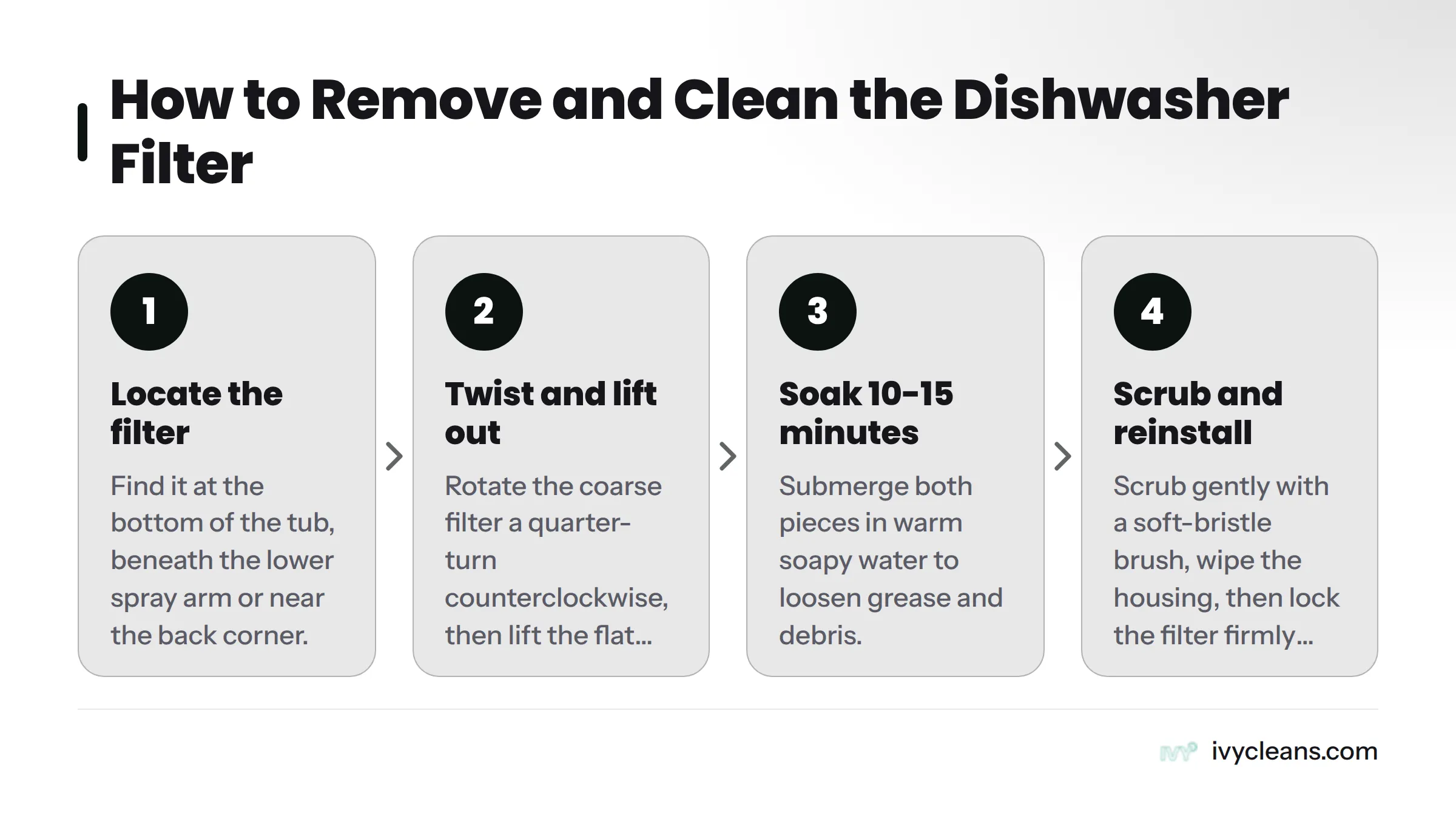
The filter sits at the bottom of the dishwasher tub, usually beneath the lower spray arm or near the back corner. Most modern dishwashers have a two-part filter: a cylindrical coarse filter that twists out, and a flat fine mesh filter underneath it.
How to remove it
Twist-lock filters rotate about a quarter-turn counterclockwise and lift straight out. Pull-out types simply lift free. Check your appliance manufacturer's manual if you're unsure which type you have - removal is model-specific. Once the coarse filter is out, lift the flat mesh filter free from its housing.
Rinse and scrub
Soak both pieces in warm soapy water for 10 to 15 minutes, then scrub away grease and debris with a soft-bristle brush or old toothbrush. Work gently so you don't tear the fine mesh. Before reinstalling, wipe out the debris trap housing at the bottom of the tub with a damp cloth. Lock the filter back into place firmly.
Cleaning the dishwasher filter monthly is the single highest-impact task on this list - especially in hard-water areas where mineral crust can lock the mesh if you let it go too long.
Step 2 - Clear the Spray Arms
Why they clog
Spray arms have small holes along their length that jet water across the dish rack during a wash cycle. Hard water deposits and food particles are the two main culprits. When even a few holes are blocked, water pressure drops and dishes don't get fully rinsed.
How to remove and rinse them
Most spray arms unclip or unscrew from their center hub - twist counterclockwise or push a release tab, depending on the model. Once removed, hold each arm under warm running water and shake it to dislodge loose debris.
Unblocking the holes
Work a toothpick or thin wire through each hole to push out mineral crust or food particles. Run water through again to confirm flow. Reinstall both arms firmly - a loose spray arm causes noise and uneven cleaning. Spray arm cleaning is worth doing every month in the Twin Cities, where hard water film builds fast.
Step 3 - Wipe Down the Door Gasket and Interior Walls
Why the gasket collects grime
The rubber door seal runs around the entire perimeter of the dishwasher door. Its folded edges trap food particles, grease, and moisture in every crease - exactly the kind of environment where dark buildup takes hold. It's one of the most overlooked spots in a home kitchen, and it's often the reason a dishwasher smells even after a cleaning cycle.
How to wipe it properly
Dampen a cloth with warm soapy water and run it slowly along every fold of the gasket, pressing into the creases. Stubborn buildup responds well to a toothbrush. Work your way around the full perimeter - top, sides, and bottom.
Interior walls and dish rack
Wipe the top, sides, and door interior with a soapy cloth. Check the dish rack arms and tines for any debris caught in the corners. A quick wipe now prevents baked-on buildup later.
Step 4 - Run a Hot Dishwasher Vinegar Cycle
Place 1 cup of white vinegar in a dishwasher-safe bowl or mug and set it on the bottom rack. Run the hottest, longest cycle available with no detergent and no dishes. The acetic acid in white vinegar cuts through grease and dissolves light limescale and hard water film - the same mineral deposits that leave Twin Cities homeowners with cloudy glasses and dull interiors.
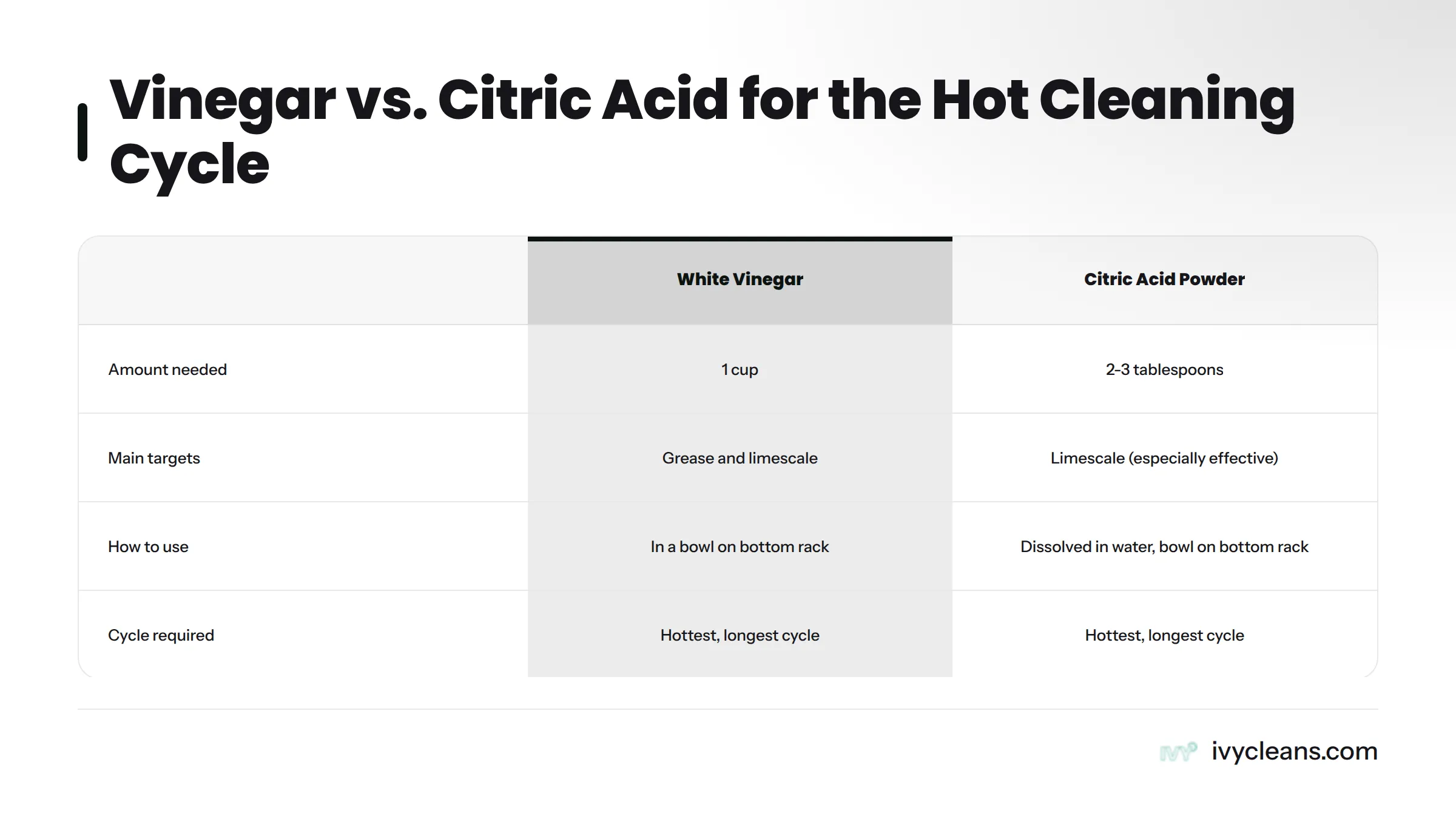
If you'd rather skip the vinegar, dissolve 2 to 3 tablespoons of citric acid powder in a cup of warm water, place it in a bowl on the bottom rack, and run the same hot cycle. Citric acid works particularly well on limescale.
⚠️ Safety Warning: Never add bleach or any bleach-based cleaner to a cycle that has had vinegar. Mixing the two releases harmful chlorine gas. If you've recently used a bleach-based dishwasher cleaner, run a plain hot water cycle first before adding vinegar.
Step 5 - Run a Baking Soda Rinse Cycle
Once the vinegar cycle finishes completely, sprinkle ½ cup of baking soda across the floor of the empty dishwasher. Run a short, hot rinse cycle with no detergent. Baking soda is a mild alkali that neutralizes acidic odors and lifts residual staining from the interior walls and tub floor. The result is a noticeably fresher-smelling machine.
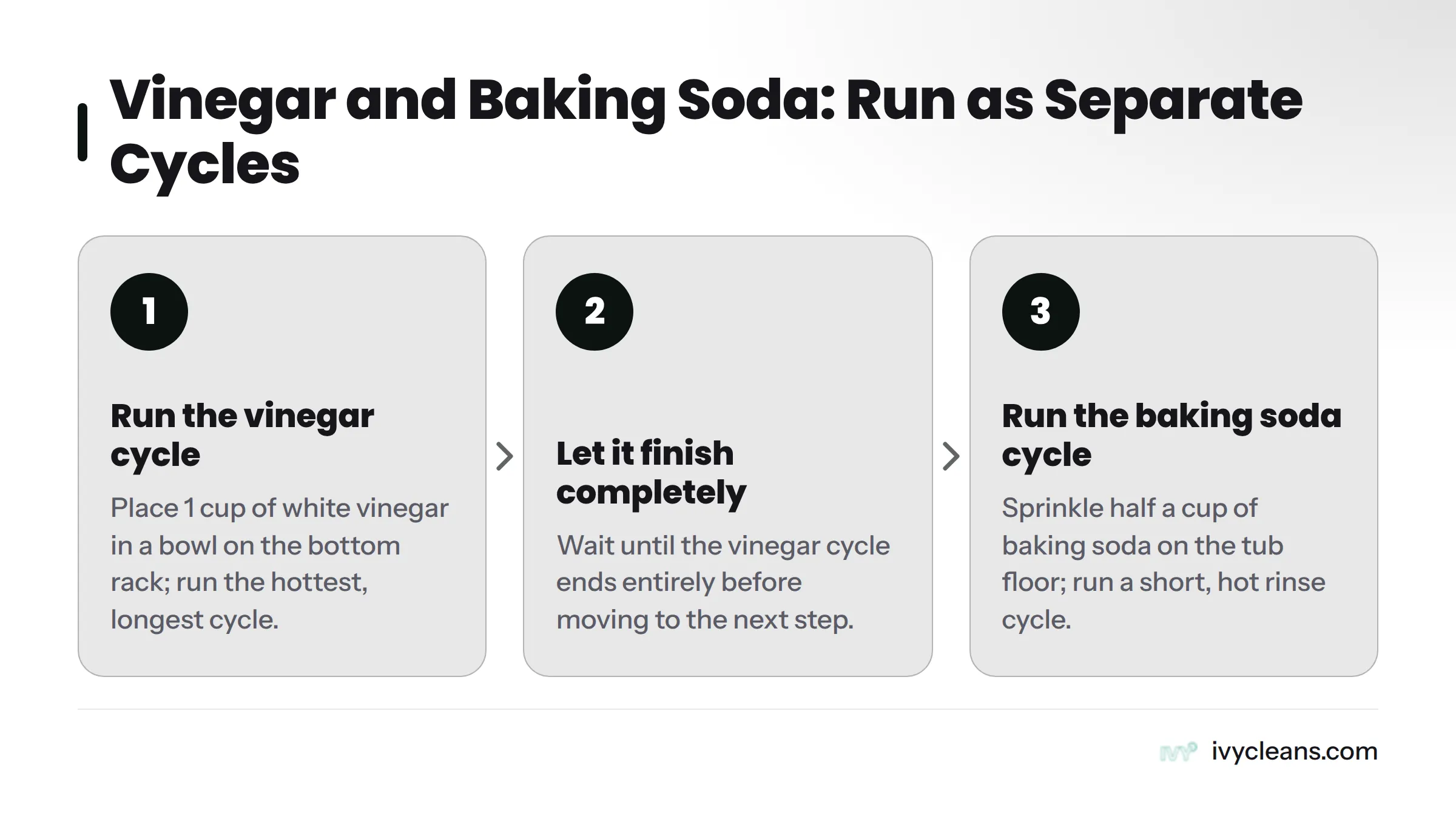
Dishwasher cleaning with baking soda and vinegar works best when you treat them as two separate steps - never combined.
Important: Always run vinegar and baking soda in completely separate cycles. If you add both at the same time, they react and neutralize each other - you get fizz, not cleaning. Run the vinegar cycle first, let it finish entirely, then run the baking soda cycle.
Step 6 - Clean the Exterior and Control Panel
The outside of the dishwasher collects fingerprints, splashes, and dust that most cleaning guides skip. It takes two minutes and makes a noticeable difference.
- Door exterior: Wipe with a lightly damp microfiber towel.
- Control panel: Use a cloth that's barely damp - avoid dripping water into button gaps or display edges.
- Handle and edges: Wipe with a soapy cloth, then dry thoroughly so no moisture sits in the seams.
- Stainless steel door (if applicable): Always wipe with the grain of the steel to avoid streaking. A dry microfiber cloth on the final pass removes any haze.
Step 7 - Set a Monthly Maintenance Schedule
Doing all 7 steps once gets you a clean dishwasher. Doing them on a schedule keeps it clean. For most Minneapolis and St. Paul homes, monthly is the minimum - the hard water here means mineral film comes back faster than in softer-water regions.
| Task | Frequency |
|---|---|
| Rinse and check the filter | Monthly |
| Wipe the door gasket | Monthly |
| Check spray arm holes | Monthly |
| Run a vinegar cycle | Monthly |
| Run a baking soda rinse | Monthly |
| Wipe exterior and control panel | Monthly |
| Full deep clean of all parts | Every 3 months or as needed |
Pairing this with refrigerator cleanout on the same day makes monthly kitchen maintenance easy to remember. It's also a natural time to clean your kitchen sink and, if you want to extend the routine to laundry, to run a washer cleaning cycle as well.
For a full kitchen reset as part of a larger cleaning day, the room-by-room house cleaning guide is a good place to start.
If you'd rather leave the appliance deep clean to someone else, Ivy Cleans can add dishwasher and appliance cleaning to any deep or recurring visit - book a deep cleaning in Minneapolis and mention it when you book.
Frequently Asked Questions
How do you clean a dishwasher inside?
Remove and scrub the filter, clear the spray arm holes, wipe the door gasket and interior walls, then run a hot empty cycle with white vinegar on the bottom rack, followed by a short baking soda rinse cycle. That covers grease, mineral buildup, and odor in one pass.
Can I put vinegar and baking soda in my dishwasher at the same time?
No. Run them in separate cycles. When vinegar and baking soda meet, they neutralize each other - the reaction produces carbon dioxide and water, not cleaning power. Run the vinegar cycle first, let it finish completely, then run the baking soda cycle on its own.
What is the best way to clean and deodorize a dishwasher that smells?
Start with the door gasket and filter - that's where odor-causing food residue and grease accumulate most. Run a hot vinegar cycle to cut grease, then follow with a baking soda rinse to neutralize lingering smells. If the dishwasher still smells after all that, check the drain area beneath the filter for trapped food.
How often should I clean my dishwasher filter?
Once a month is the standard for most households. If you run your dishwasher daily or notice food residue on dishes, check it every two weeks. In hard-water areas like the Twin Cities, monthly cleaning also prevents mineral crust from locking the filter mesh.
Can I use a dishwasher cleaner tablet instead of vinegar?
Yes. A dishwasher cleaner tablet - such as those made by Affresh or similar brands - placed in the bottom of an empty dishwasher and run on a hot cycle does a solid job on grease and mineral buildup. It's a convenient alternative when you don't have vinegar on hand. Always check the tablet label to confirm it's bleach-free if you plan to follow with a vinegar cycle.
Why does my dishwasher still smell after cleaning?
If the smell stays after a full clean, the most likely cause is food debris trapped somewhere the cleaning cycle can't reach: inside the filter housing, in the door gasket folds, or in the drain area beneath the debris trap. Pull the filter out again and inspect the housing with a flashlight. Also check that the spray arms are fully clear - a blocked arm leaves food sitting in the tub instead of flushing it out.
Is it safe to use citric acid in a dishwasher?
Yes. Citric acid is a food-grade organic acid found naturally in citrus fruit. Dissolved in water and run through a hot empty cycle, it dissolves limescale and hard water film without damaging the dishwasher's interior components or seals. It's a good option if you want to avoid the smell of vinegar or need a stronger mineral-fighting agent.
Sources
Ivy Cleans cleans homes across Minneapolis and nearby, including St. Louis Park, Edina and Inver Grove.
